

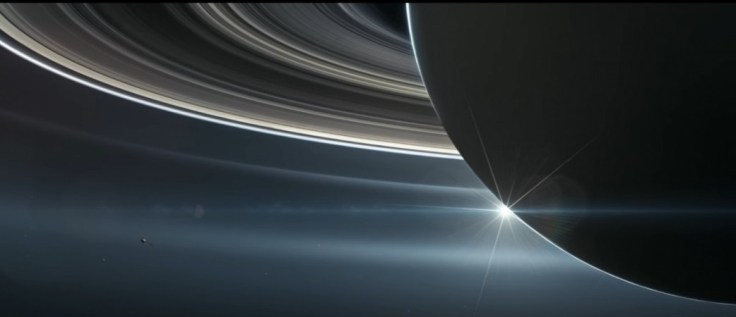
 As one of the most scientifically rich voyages ever undertaken in our solar system reaches its dramatic conclusion, an astrophysicist who examines data from NASA’s pioneering Cassini mission joins the University of Lincoln, UK, to establish an exciting new specialism in space, planets and moon formation.
Dr Phil Sutton’s work focusses on the scientific study of the rings around Saturn – the second largest planet in our solar system.
His research uses optical images sent back to Earth from NASA’s Cassini spacecraft, which is currently orbiting Saturn after almost 20 years in space. Cassini is now embarking on the final chapter of its remarkable exploration – labelled its ‘Grand Finale’.
Cassini was launched in 1997, took seven years to travel to Saturn, and has spent the last 13 years orbiting the planet. Throughout its journey, Cassini has sent an extensive catalogue of invaluable…
View original post 657 more words

 Phil Sutton starts his new position at the University of Lincoln in the School of Mathematics and Physics as Lecturer of Astrophysics 1st September 2017. He obtained his undergraduate degree at Nottingham Trent in Physics with Astrophysics in 2006. During his undergraduate studies and up until taking a position in the physics department at Loughborough University in 2007 he also worked as mechanic building and racing cars. Experimentation with large engines in small cars (Vauxhall corsa) led to some success at national events. Winning first place in the 1/4 mile (low 12 seconds with terminal speeds of 128mph) at Santa Pod raceway at the performance Vauxhall show and placing in the finals at Ten Of The Best, a national event to find the fastest street legal cars in country.
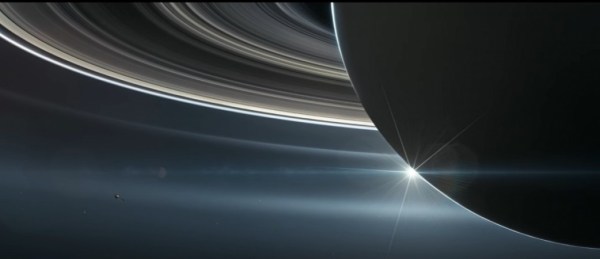
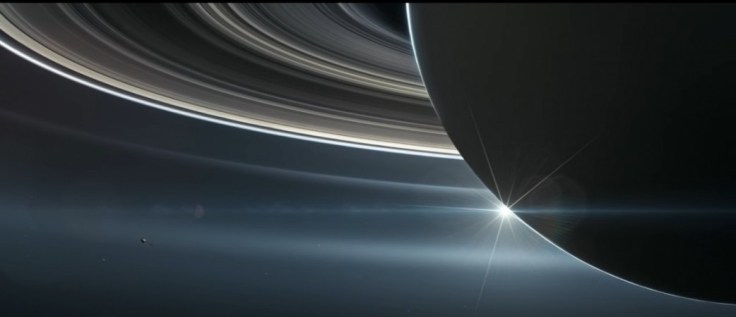
 The Cassini spacecraft has been in orbit around Saturn since 2004. The unprecedented detail of over a decade’s worth of observations of Saturn, its rings and many moons has helped us further understand our Solar System. With Saturn being placed onto a direct collision with Saturn in the later part of 2017 we are expecting the most exciting science to come from these more risky manoeuvres. We will recap some of the most important and exciting discoveries that Cassini has made over the following decade along with its very last contributions to science.
 Lincoln Astrophysics Team