Professor Don Kurtz will be giving a public lecture at the University of Lincoln entitled “It’s About Time” on Friday, 7th March 2025 at 6:00-7:40 pm, which will include an interval and Q&A.
Time: 6:00-7:40 pm 7th March 2025
Place: Newton Lecture Theatre INB0114 in the Isaac Newton building, University of Lincoln
Description: Days, Weeks, Months, Years and more: Hear about Roman Emperors, Zulu Wars, Rider Haggard, Thomas Hardy, the English time riots, and how the days of the week got their names in an amusing and informative tour of the Western calendar.
The next Astro-Chat hosted by Professor Andrei Zvelindovsky at the University of Lincoln, with distinguished guest Professor Don Kurtz, will be held on 11th December 2024 at 7-8pm GMT, in which Don will discuss Jupiter’s moon Europa, the Europa Clipper mission, and delve into the possibility of life on Europa. After an introductory talk by Don, members of the public will be able to ask questions in the live-chat.
Katharine Johnston joined the School of Mathematics and Physics at the University of Lincoln as a Lecturer in Astrophysics at the start of 2024.
She obtained her undergraduate and PhD degrees at the University of St Andrews, during which she spent time at National Radio Astronomy Observatory as part of a Graduate Internship and at the Harvard-Smithsonian Center for Astrophysics as a Predoctoral Fellow. After completing her PhD in 2010, she became a Postdoctoral Fellow in (Sub)millimetre Astronomy at the Max Planck Institute for Astronomy in Heidelberg for three years, during which she spent three months as a member of the ALMA Commissioning and Science Verification Team. She then returned to the UK in 2014 as a Postdoctoral Research Assistant and later as a Research Fellow at the University of Leeds.
Katharine’s research focusses on the formation of high-mass stars using observations at infrared through radio wavelengths, with a particular interest in high-resolution observations at mm and cm wavelengths to resolve the discs and jets associated with massive stars. She also studies star formation in the Central Molecular Zone of the Milky Way.
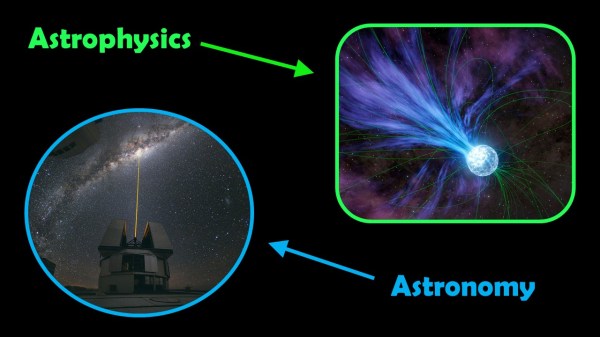
Astronomy and astrophysics are closely related fields that often overlap, but they have distinct focuses and approaches. Here’s a breakdown of the differences between the two:
Astronomy
Astronomy is the broader science that involves the study of celestial objects and phenomena beyond Earth’s atmosphere. It includes the observation and analysis of stars, planets, comets, galaxies, and other celestial bodies. Primarily observational, using telescopes and other instruments to gather data about the universe. Includes planetary astronomy, stellar astronomy, galactic astronomy, and observational cosmology.
Astrophysics
Astrophysics is a branch of astronomy that applies the principles of physics and chemistry to understand how celestial objects and phenomena work. Focuses on celestial bodies’ underlying physical processes and properties, such as their formation, evolution, and behavior. Combines observational data with theoretical models and simulations to explain the physical mechanisms at play. Includes cosmology (the study of the universe’s origin and evolution), stellar dynamics, planetary science, and high-energy astrophysics.
Key Differences
Astronomy is often more observational, cataloging and describing what is seen in the sky. Astrophysics seeks to explain these observations through physical theories. Astronomers might spend more time on practical aspects like telescope design, data collection, and image processing. Astrophysicists might spend more time on theoretical work and modeling.
In summary, while astronomy and astrophysics are intertwined, astronomy is more focused on the observation and cataloging of celestial objects, whereas astrophysics is dedicated to understanding the physical processes that govern these objects and phenomena.
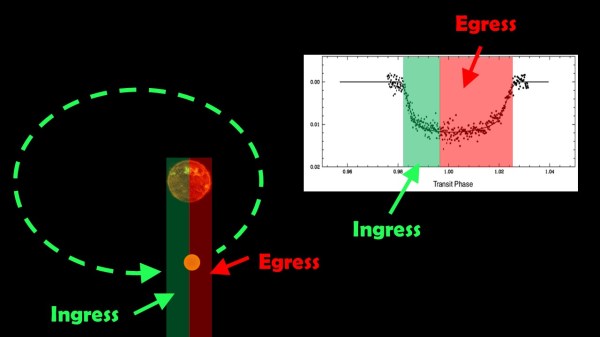
If you’ve ever heard about a new exoplanet being discovered, it was most likely found using the transit method. Astronomers continuously monitor the brightness of a star over time using telescopes equipped with sensitive photometers to detect any small changes in the star’s light. When an exoplanet passes, or “transits,” in front of its host star from our viewpoint, it causes a slight but measurable dimming of the star’s light. This dip in brightness occurs because the planet blocks a portion of the starlight.
Quite straightforward, right? However, did you know that the transits often show variations from transit to transit, i.e. they aren’t always the same length, depth (how much light is blocked out), time or even symmetric. Below are a range of videos that explain how additional unseen exoplanets, exomoons, orbital parameters and even how the changing relative orientation of exoplanets orbit can alter the transit.



 Lincoln Astrophysics Team