New member of staff: Katharine Johnston

Katharine Johnston joined the School of Mathematics and Physics at the University of Lincoln as a Lecturer in Astrophysics at the start of 2024.

She obtained her undergraduate and PhD degrees at the University of St Andrews, during which she spent time at National Radio Astronomy Observatory as part of a Graduate Internship and at the Harvard-Smithsonian Center for Astrophysics as a Predoctoral Fellow. After completing her PhD in 2010, she became a Postdoctoral Fellow in (Sub)millimetre Astronomy at the Max Planck Institute for Astronomy in Heidelberg for three years, during which she spent three months as a member of the ALMA Commissioning and Science Verification Team. She then returned to the UK in 2014 as a Postdoctoral Research Assistant and later as a Research Fellow at the University of Leeds.

Katharine’s research focusses on the formation of high-mass stars using observations at infrared through radio wavelengths, with a particular interest in high-resolution observations at mm and cm wavelengths to resolve the discs and jets associated with massive stars. She also studies star formation in the Central Molecular Zone of the Milky Way.
Astronomy or Astrophysics? A Guide to Help You Decide What to Study

Astronomy and astrophysics are closely related fields that often overlap, but they have distinct focuses and approaches. Here’s a breakdown of the differences between the two:

Astronomy

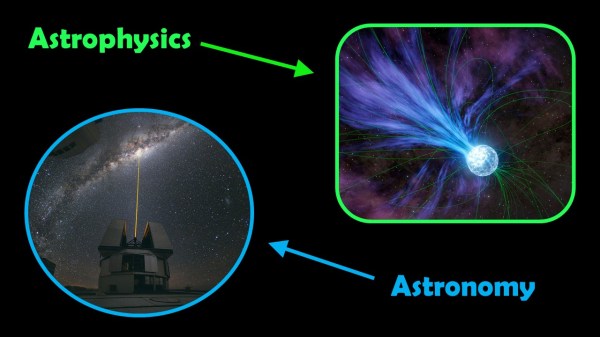
Astronomy is the broader science that involves the study of celestial objects and phenomena beyond Earth’s atmosphere. It includes the observation and analysis of stars, planets, comets, galaxies, and other celestial bodies. Primarily observational, using telescopes and other instruments to gather data about the universe. Includes planetary astronomy, stellar astronomy, galactic astronomy, and observational cosmology.

Astrophysics

Astrophysics is a branch of astronomy that applies the principles of physics and chemistry to understand how celestial objects and phenomena work. Focuses on celestial bodies’ underlying physical processes and properties, such as their formation, evolution, and behavior. Combines observational data with theoretical models and simulations to explain the physical mechanisms at play. Includes cosmology (the study of the universe’s origin and evolution), stellar dynamics, planetary science, and high-energy astrophysics.

Key Differences

Astronomy is often more observational, cataloging and describing what is seen in the sky. Astrophysics seeks to explain these observations through physical theories. Astronomers might spend more time on practical aspects like telescope design, data collection, and image processing. Astrophysicists might spend more time on theoretical work and modeling.

In summary, while astronomy and astrophysics are intertwined, astronomy is more focused on the observation and cataloging of celestial objects, whereas astrophysics is dedicated to understanding the physical processes that govern these objects and phenomena.

Exoplanet Detection: Transit Variations

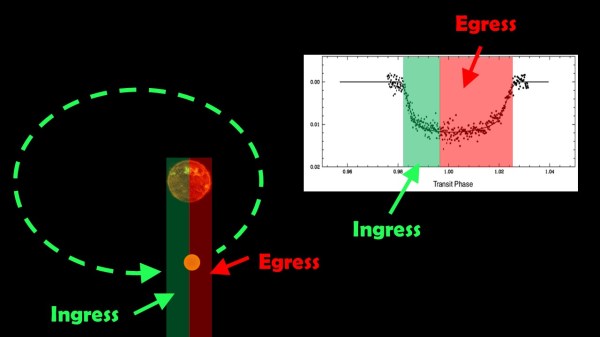
If you’ve ever heard about a new exoplanet being discovered, it was most likely found using the transit method. Astronomers continuously monitor the brightness of a star over time using telescopes equipped with sensitive photometers to detect any small changes in the star’s light. When an exoplanet passes, or “transits,” in front of its host star from our viewpoint, it causes a slight but measurable dimming of the star’s light. This dip in brightness occurs because the planet blocks a portion of the starlight.

Quite straightforward, right? However, did you know that the transits often show variations from transit to transit, i.e. they aren’t always the same length, depth (how much light is blocked out), time or even symmetric. Below are a range of videos that explain how additional unseen exoplanets, exomoons, orbital parameters and even how the changing relative orientation of exoplanets orbit can alter the transit.

Exploring Super and Micro Moons: Are Any Left in 2024?

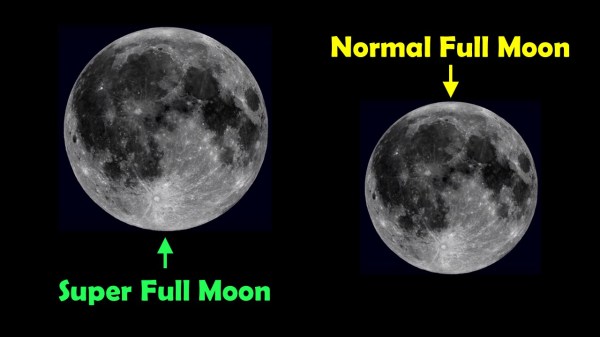
A super full moon, also known as a supermoon, occurs when a full moon coincides with the moon’s closest approach to Earth in its orbit, called perigee. This close proximity makes the moon appear larger and brighter in the sky than usual. Supermoons can appear up to 14% larger and 30% brighter than a regular full moon, though the difference may not always be easily discernible to the naked eye. Supermoons are relatively rare events and can create spectacular views for skywatchers.

The remaining super full moons of 2024 will be on 18th September and 17th October.

A micro new moon occurs when the new moon coincides with the moon’s farthest point from Earth in its orbit, called apogee. During a micro new moon, the moon appears slightly smaller in the sky than usual because it is farther away from Earth. Unlike supermoons, which appear larger and brighter, micro new moons may not be as noticeable to the naked eye due to their reduced size and brightness. These events are also relatively rare and can offer interesting astronomical observations for enthusiasts.

The remaining micro new moon of 2024 will be on 2nd October, which coincides with an annular (ring of fire) eclipse.

The Sub-Neptune Radius Valley: A Preview of Our New Module “The Solar System and Exoplanets”

Excited for the second year of our new Physics with Astrophysics degree program at the University of Lincoln! Right now, I’m fully immersed, working on one of our new modules called “The Solar System and Exoplanets.” We’re diving deep into how planets form and trying to unravel the mystery of the huge variety of exoplanets we keep discovering. Check out this quick video for a taste of what we’re digging into in the module.


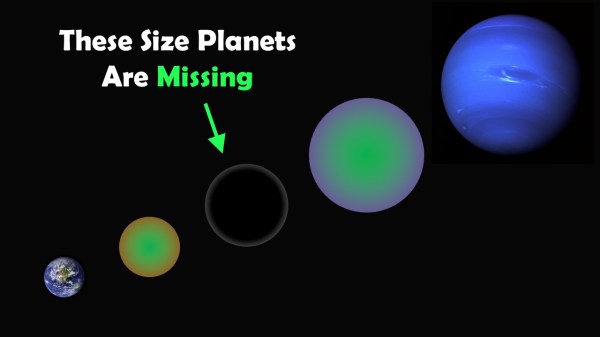
The apparent lack of planets with radii 1.5–2 times that of Earth is known as the Sub-Neptune radius valley. First noted in 2011, a bimodality in the Kepler exoplanet population was ascribed to the lack of substantial gas atmospheres on close-in, low-mass planets. It was mentioned that this trait could support the growing theory that atmospheric mass loss could be caused by photoevaporation. This would result in a population of planets with thick envelopes dominated by helium and hydrogen with bigger radii at higher separations from their parent stars, and a population of naked, rocky cores with lower radii at small separations.

Start a Blog at WordPress.com.

Up ↑