New member of staff: Katharine Johnston

Katharine Johnston joined the School of Mathematics and Physics at the University of Lincoln as a Lecturer in Astrophysics at the start of 2024.

She obtained her undergraduate and PhD degrees at the University of St Andrews, during which she spent time at National Radio Astronomy Observatory as part of a Graduate Internship and at the Harvard-Smithsonian Center for Astrophysics as a Predoctoral Fellow. After completing her PhD in 2010, she became a Postdoctoral Fellow in (Sub)millimetre Astronomy at the Max Planck Institute for Astronomy in Heidelberg for three years, during which she spent three months as a member of the ALMA Commissioning and Science Verification Team. She then returned to the UK in 2014 as a Postdoctoral Research Assistant and later as a Research Fellow at the University of Leeds.

Katharine’s research focusses on the formation of high-mass stars using observations at infrared through radio wavelengths, with a particular interest in high-resolution observations at mm and cm wavelengths to resolve the discs and jets associated with massive stars. She also studies star formation in the Central Molecular Zone of the Milky Way.
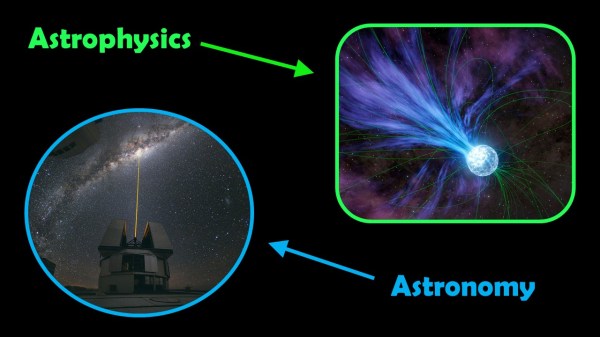
Astronomy or Astrophysics? A Guide to Help You Decide What to Study

Astronomy and astrophysics are closely related fields that often overlap, but they have distinct focuses and approaches. Here’s a breakdown of the differences between the two:

Astronomy

Astronomy is the broader science that involves the study of celestial objects and phenomena beyond Earth’s atmosphere. It includes the observation and analysis of stars, planets, comets, galaxies, and other celestial bodies. Primarily observational, using telescopes and other instruments to gather data about the universe. Includes planetary astronomy, stellar astronomy, galactic astronomy, and observational cosmology.

Astrophysics

Astrophysics is a branch of astronomy that applies the principles of physics and chemistry to understand how celestial objects and phenomena work. Focuses on celestial bodies’ underlying physical processes and properties, such as their formation, evolution, and behavior. Combines observational data with theoretical models and simulations to explain the physical mechanisms at play. Includes cosmology (the study of the universe’s origin and evolution), stellar dynamics, planetary science, and high-energy astrophysics.

Key Differences

Astronomy is often more observational, cataloging and describing what is seen in the sky. Astrophysics seeks to explain these observations through physical theories. Astronomers might spend more time on practical aspects like telescope design, data collection, and image processing. Astrophysicists might spend more time on theoretical work and modeling.

In summary, while astronomy and astrophysics are intertwined, astronomy is more focused on the observation and cataloging of celestial objects, whereas astrophysics is dedicated to understanding the physical processes that govern these objects and phenomena.

Start a Blog at WordPress.com.

Up ↑